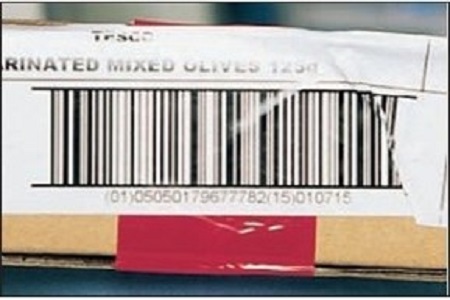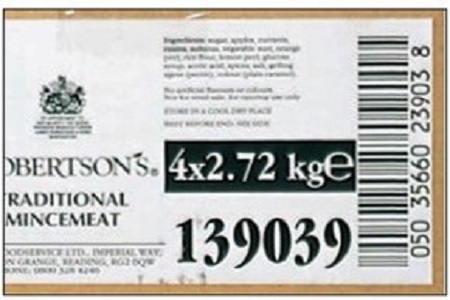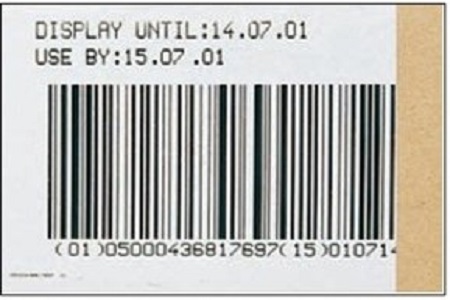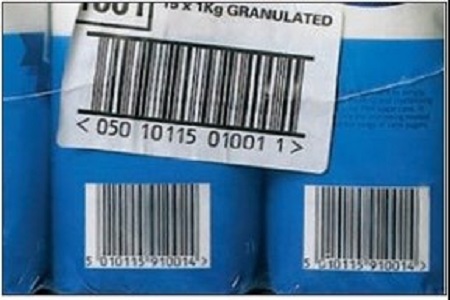


Taking Control of Barcode Quality


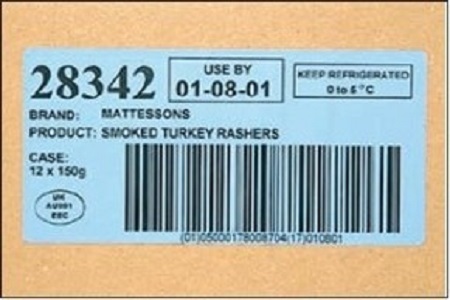
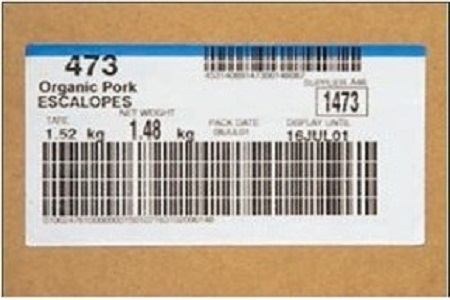
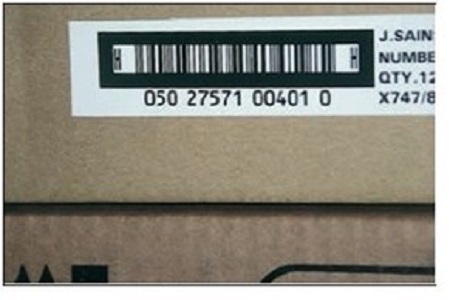
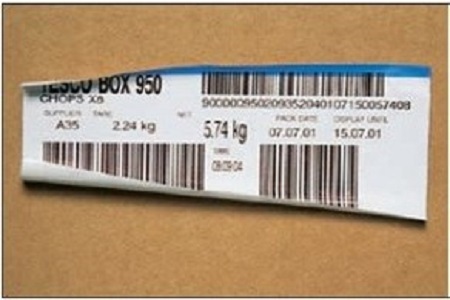
In demanding production environments, flexibility and responsiveness have introduced a new complexity to the packaging operation. More frequent changeovers and increased pack variants require revision of practices in barcode validation and verification, to ensure the correct packaging is selected and co-ordinated on primary packs, cases and pallets. Accurate barcodes, with proven clarity, guarantee a seamless product transfer through the extended international supply chain.


As GSI Accredited Solution Providers, Cobalt has recognised expertise in introducing good practices to achieve the highest barcode quality. Preventing incorrect or poor quality barcodes from entering the supply chain eliminates fines, rejects and rework for suppliers.


Meeting Compliance Requirements

It is the manufacturers' responsibility to ensure that bar code formats satisfy the requirements of International ANSI Standard ISO/IEC 15416, and are compliant with the GSIUK Coding System. Minimum acceptable ANSI gradings are prescribed, to ensure that the supply chain is focused on the effective flow of goods.


Developments towards GDSN and a UK Datapool, with shared and common item identification, is opening the way to a more co-operrative trading environment. Alignment of data between suppliers and retailers based on a single point of coding, at source, will enable comprehensive supply chain efficiency opportunities.


Off-line Sampling

Complete barcode verification is achieved using equipment which conforms to ISO/IEC 15426-1. Trained operators must use accredited, calibrated equipment and a process of regular sampling, to introduce discipline to barcoding practices. The full reporting is adequate to satisfy retail audit requirements.


ISO/IEC 15416 requires 7 attributes to be tested in up to 10 separate positions of each barcode to devise an alphabetic grading from A to D, or fail. The tested attributes are:


  • Decode - checks that the area being scanned meets the criteria of a recognised bar code format
  • Minimum reflectance -compares the reflectance of the bar to that of the background
  • Symbol contrast -measures the overall range of contrast between the bars and the background media
  • Minimum edge contrast - measures the definition of the poorest bar in the code
  • Modulation - measures the consistency of reflectance throughout
  • Defects - ensures bars are complete and spaces are empty
  • Decodability - measures the dimensional accuracy of the bar code


Conducted thoroughly, off-line testing is a rigorous process which audits barcoding procedures. In the event that a faulty bar code is identified, corrective action can be taken. The quality of the sampling method and the speed of interpretation of results is critical to implementing an effective procedure to capture early failures and react before production, packing and distribution has been executed.


In-line Solutions

In high speed production environments, barcode checking needs to be part of the production/packaging process to ensure that the first incidence of deviation is highlighted and responded to. This leads to an alternate approach, checking every pack and preventing poorly coded packs from entering the supply chain. There are a number of alternative approaches here:


Barcode Checking

In-line scanning equipment introduces a check to every pack, giving a pass or fail result based on whether a bar code is present and can be read. Identification of a fail prompts an immediate response of reject, re-label or line shutdown.


Barcode equipment is designed to find a read and has built-in tolerance of poor barcode features. As this may not match the capabilities of scanners all through the supply chain, there is no guarantee of continuing compliance.


Barcode Inspection

Using the intelligent capabilities of more advanced scanning devices, degradation in barcode legibility is identified before failure occurs. By calculating the proportion of barcode that can be read, a Good/OK/Fail rating is determined. As legibility degrades visual, audible and digital alarms are activated to prompt rectification of the issue. In this situation a fail condition prompts line stoppage.


Cobalt Sentinel

Applying additional interpretive logic, the Cobalt Sentinel simulates full off-line verification to result in an "ANSI equivalent" grading of A-D or Fail. Degradation of quality is identified graphically from its earliest stage. Line operatives are fully aware of the severity of the degradation, and are able to make informed decisions on the corrective action required to continually achieve the highest quality ratings.


The Cobalt Sentinel maintains full audit logs of bar code quality by event, with evidence of corrective action taken, including reason codes.


Validating Pack and Labelling Choice

A good quality bar code is worthless if it incorrectly identifies pack contents. Validity checks ensure the bar code on outer packaging truly reflects the actual product content.


The Cobalt Sentinel delivers match code functionality to check pre-printed media, off-line printed labels and in-line coding, validated against pre-defined packaging requirements before the packing process begins. This coding coordination ensures 100% validation of primary and secondary packaging to actual contents.


Advanced options extend the Cobalt Sentinel's validation role into batch setup and text recognition.